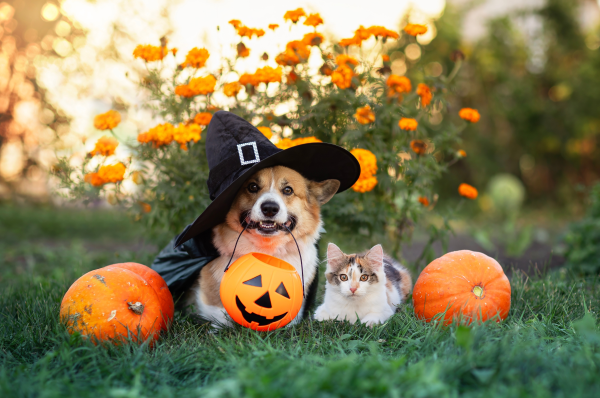
Your dog looks adorable as Batman. Your cat’s tiny witch hat is ready for its Instagram debut. But are they enjoying Halloween as much as you are?
Costumes, visitors, and ringing doorbells can make the evening overwhelming for dogs and cats. Their body language can help you decide how they prefer to celebrate.
Try these five questions to see what your pet might be telling you.
1. Does your pet actually want to be Batman?
You put a superhero costume on your dog. They stop moving, lower their head, and tuck their tail. What should you do?
- Take a photo while they’re sitting still.
B. Leave it on until they get used to it.
C. Gently remove the costume and give them a break.
D. Add the mask to complete the outfit.
Answer: C. Gently remove the costume and give them a break.
Stillness can be misleading. A dog or cat who freezes in a costume may be frightened or uncomfortable. Freezing, a lowered posture, and a tucked tail are possible signs of distress—even when your pet isn’t struggling or making noise.
Remove the outfit calmly. Scratching or biting at clothing, refusing to move, or repeatedly trying to escape are also reasons to stop dressing up. Your pet doesn’t need to wear a costume to be part of your celebration.
2. Your dog isn’t growling. Does that mean they’re comfortable?
A visitor wearing a large mask approaches your dog. Your dog turns their head away, licks their lips, and crouches. What is the best response?
- Give your dog space and ask the visitor to step back.
B. Encourage the visitor to pet them.
C. Wait for a growl before stepping in.
D. Hold your dog still for the introduction.
Answer: A. Give your dog space and ask the visitor to step back.
Dogs can show discomfort long before they growl. Turning away, lip licking, and crouching may signal that an interaction is becoming stressful. Read these signs together and consider what is happening around your dog; one lip lick on its own doesn’t tell the whole story.
Create some distance and let your dog decide whether to approach again. Relaxed, loose body movements are more reassuring than a tense, motionless posture.
3. Your cat has disappeared from the party. Should you bring them back?
When guests arrive, your cat crouches, flattens their ears, and retreats to a favourite hiding spot. What should you do?
- Carry them out so they can meet everyone.
B. Ask guests to offer attention in their hiding spot.
C. Block the hiding spot so they stay nearby.
D. Let them retreat and ask guests to leave them alone.
Answer: D. Let them retreat and ask guests to leave them alone.
Crouching and flattened ears can signal distress. Cats also use hiding places to feel safer when anxious or threatened. A retreat gives your cat a way to manage an uncomfortable situation.
Before visitors arrive, prepare a familiar, quiet room with a hiding place, comfortable bedding, water, and a litter box. Let your cat settle there and keep guests from disturbing them.
4. When is a festive bandana a better choice?
Your pet dislikes a full costume but is comfortable wearing their usual collar. Which option best puts their comfort first?
- Keep the costume on for shorter photo sessions.
B. Try a simple bandana later, only if they remain comfortable.
C. Hold them while someone takes a quick picture.
D. Choose a tighter costume so it moves less.
Answer: B. Try a simple bandana later, only if they remain comfortable.
A lightweight bandana may be less intrusive than a full outfit, but your pet’s response still matters. Give them a break first and skip accessories altogether if they show discomfort.
Any clothing should allow normal movement, breathing, vision, and hearing. Avoid dangling decorations or parts your pet could swallow and supervise them while wearing it. Remove a bandana if they paw at it, chew it, freeze, or try to get away.
5. Your pet usually loves visitors. Should they greet every trick-or-treater?
Your normally social pet begins pacing and startling each time the doorbell rings. What is the best plan?
- Keep them at the door because they usually enjoy company.
B. Ask more visitors to give them attention.
C. Move them to a familiar quiet space and reduce the interruptions.
D. Wait until they hide or growl before changing anything.
Answer: C. Move them to a familiar quiet space and reduce the interruptions.
Even outgoing pets can find repeated noise and unfamiliar visitors overwhelming. Plan around how your pet feels that evening. A secure room away from the door can reduce disturbance and help prevent escapes.
You can also hand out candy outside so visitors don’t need to ring the bell.
Halloween gives you a chance to practise a skill that matters every day: noticing your pet’s signals and responding appropriately. Whether they enjoy a brief greeting, a comfortable bandana, or an evening in their favourite hiding spot, let their comfort guide the celebration. If your pet has a history of intense Halloween fear, speak with your veterinarian beforehand about a plan to help them cope.