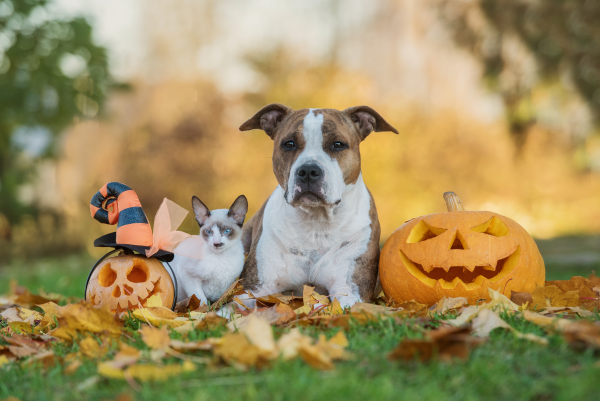
From creative costumes to glowing pumpkins, Halloween brings plenty of fun—but some traditions can be frightening or unsafe for pets. A little preparation can help you enjoy the celebrations while keeping your furry friend comfortable and secure.
Choose Comfort Over Costume
That taco costume may be hard to resist, but your pet might be less enthusiastic! Before dressing them up, consider their comfort and safety. Choose an outfit that fits properly and allows them to move, breathe, see, and hear freely. Avoid loose pieces or small decorations that could become choking hazards if chewed off.
Pro tip: Frequent yawning, lip licking, or attempts to shake or scratch off the costume may mean your pet is uncomfortable. If they seem stressed, remove the outfit. A simple festive bandana may be a more comfortable choice—if your pet enjoys wearing one.
Save the Candy for Trick-or-Treaters
Halloween treats belong in human hands, away from curious paws. Chocolate can be toxic to dogs and cats. Raisins are also a poisoning risk, and xylitol—a sweetener found in some sugar-free candy—is especially dangerous for dogs. Even candy wrappers can cause trouble if swallowed, including intestinal blockages.
Give your pet a treat of their own, such as a pet-friendly snack or a small amount of plain pumpkin puree (not pumpkin pie filling). Remind children and visitors to keep their candy to themselves, no matter how convincing those pleading eyes may be!
Decorate with Curious Pets in Mind
A flickering pumpkin or dangling decoration can be tempting to investigate. Unfortunately, a pet can knock over a jack-o’-lantern with a lit candle, causing burns or starting a fire. Glow sticks are generally considered nontoxic, but their contents can cause excessive drooling or vomiting if a pet bites into them.
Keep potentially hazardous decorations out of reach. Use battery-operated candles in pumpkins, and secure hanging decorations and artificial cobwebs so pets cannot become tangled in them.
Create a Quiet Halloween Hideaway
Doorbells, unfamiliar visitors, and unusual costumes can make Halloween overwhelming for pets. Give them a quiet, secure room where they can settle away from the activity. Their favorite blanket, a few toys, and soft music can help create a comfortable retreat.
For pets that are sensitive to noise, a calming vest or pheromone diffuser may be worth discussing with your veterinarian. If your pet tends to become very anxious, contact your veterinary team before Halloween to ask about suitable anxiety-management options.
Pro tip: Watch for signs of stress, such as pacing, panting, hiding, or excessive drooling. If your pet seems uneasy, give them space and keep the festivities away from their retreat.
Keep the Front Door from Becoming an Escape Route
With the door opening repeatedly for trick-or-treaters, pets have plenty of opportunities to slip outside. Keep them indoors and away from the entrance. Gates, crates, or closed doors can help keep them secure while you greet visitors.
Check that your pet’s ID tags show your current contact information. If they are not microchipped, consider arranging it before Halloween. Take a recent photo, too, so you have one ready if they go missing. An up-to-date ID tag can help someone contact you quickly if they find your pet.
Whether your pet enjoys a comfortable costume or prefers a quiet evening in their favorite spot, let their comfort guide your plans. With a little care, you can help make Halloween a treat for everyone—furry family members included!